Does My Business Need a Website?
Does your business need a website when it already has social media? The honest answer, the benefits that follow, and what a website will not do.
 Pablo
Pablo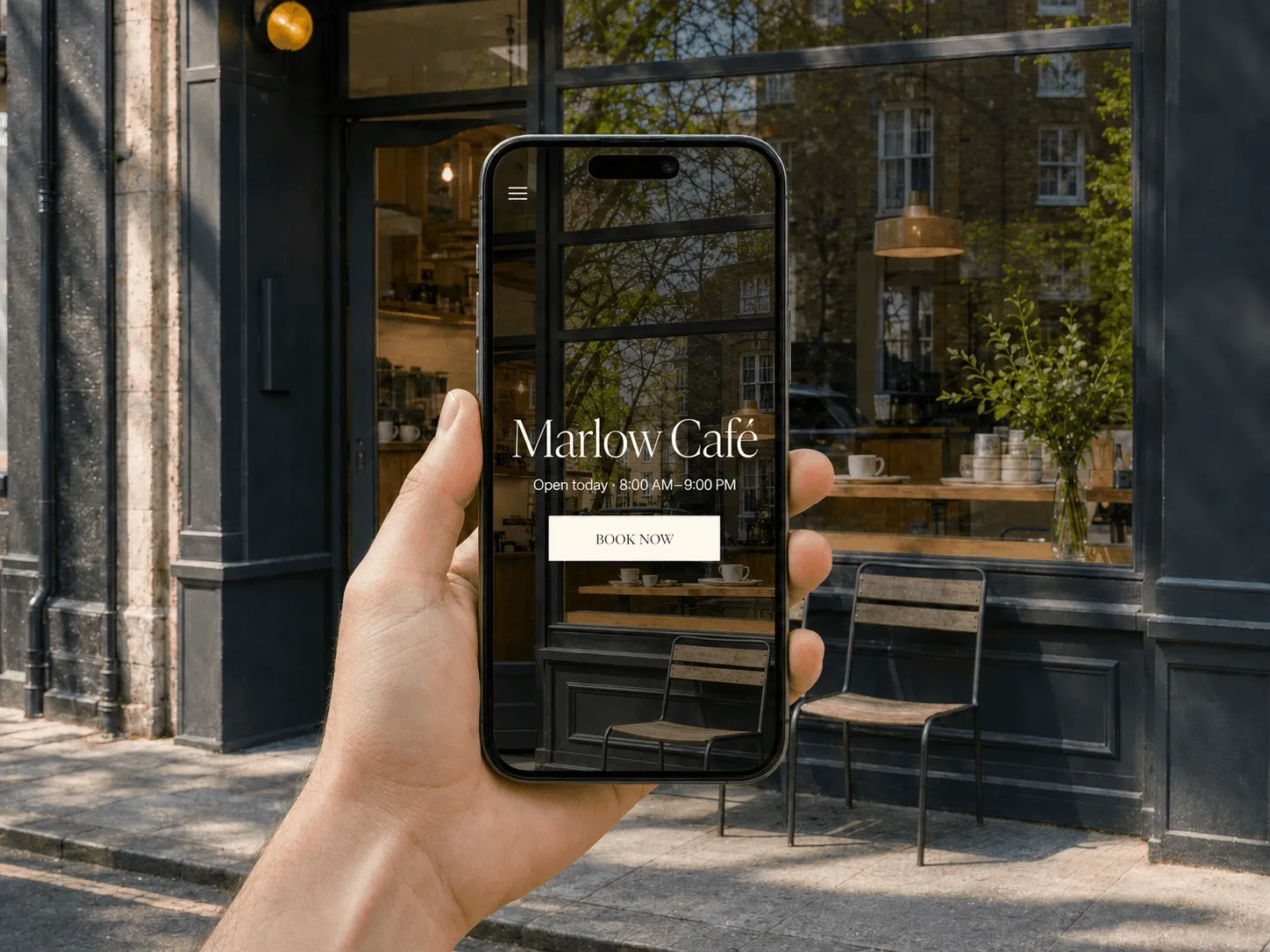
Does My Business Need a Website? The Benefits for a Small Local Business
Your business requires a website the moment customers need to find you, learn what you offer, or book an appointment. The main reason is ownership.
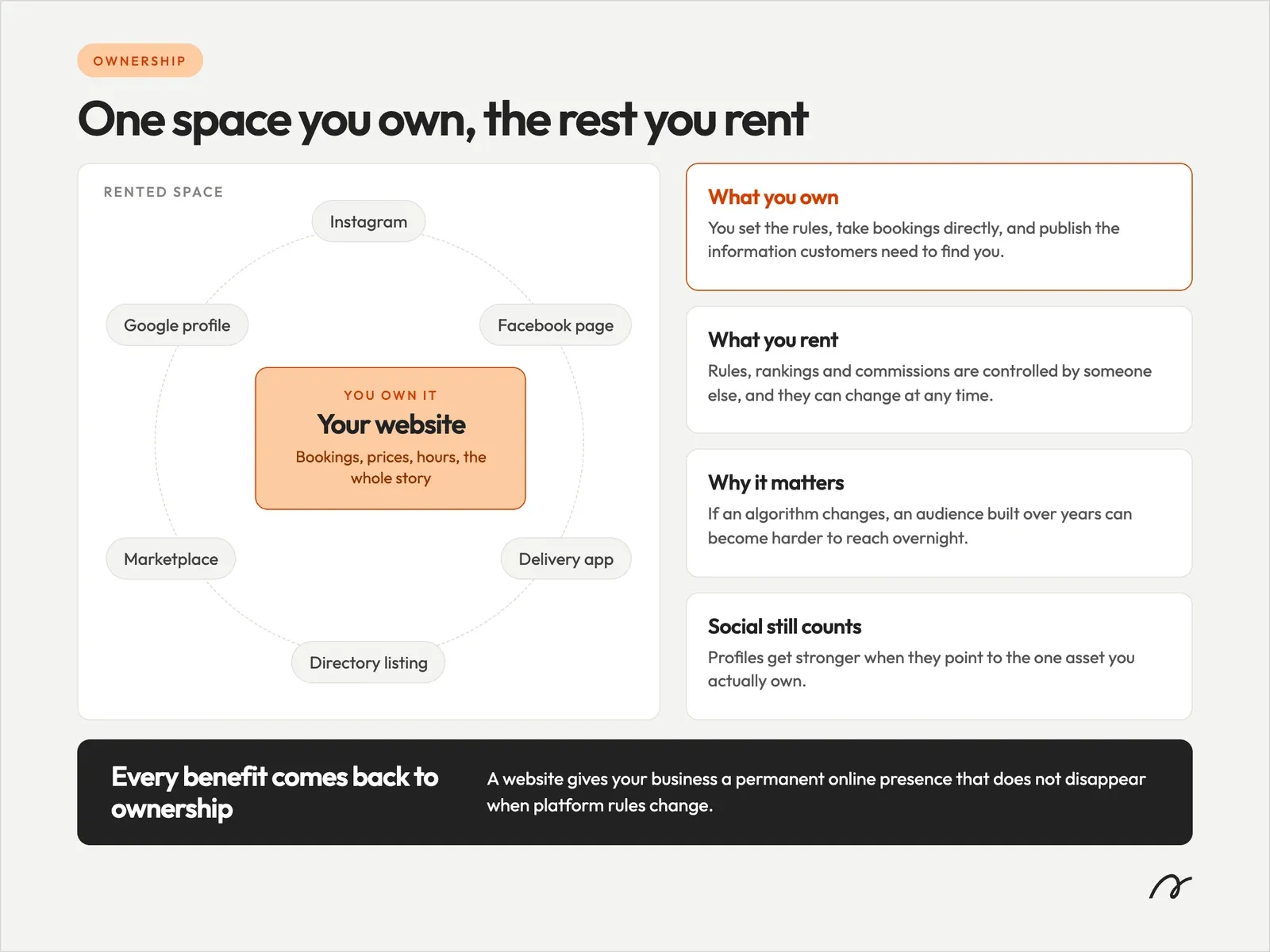
Whether it’s a social media account, delivery app, or directory listing, all of them put your customers in the hands of another platform, with rules, rankings, and commissions controlled by someone else.
A website is your own space where you set the rules, take bookings directly, and publish the information customers need to find you.
It also gives your business a permanent online presence that won’t disappear when platform rules change.
Social profiles are still valuable; they become even more powerful when they direct customers to the one online asset you truly own.
Many small local businesses operate for years without a website.
An Instagram account, a Facebook page, a delivery app listing, and word-of-mouth can be enough to keep business moving.
The real question isn’t whether you can survive without a website, but how much business you’re missing without one, and whether it’s time to stop that loss.
Why Is a Website Crucial for Business?
It’s About What You Own
Behind every reason to have a website is one simple fact: your website is the only part of your online presence that you truly own.
Every small business already has an online footprint somewhere.
The real difference is who owns that space.
Whether it’s a social media profile, a delivery platform, or a directory listing, those platforms are rented.
They can change their rules, rankings, or fees at any time, and your business has little control.
Your website, on the other hand, belongs to you.
That single distinction influences every benefit that follows.
Every Website Advantage, One by One
When people discuss the benefits of a website, they often present them as separate advantages.
In reality, they’re all connected because they stem from one core principle: ownership.
You Own the Customer Relationship
Unlike rented platforms where customer relationships are controlled by algorithms, your website belongs to you.
If a platform changes its algorithm, the audience you’ve spent years building may suddenly become harder to reach.
Visitors who come to your website are your responsibility, not someone else’s.
Your social media presence still matters, but it no longer becomes the only asset your business depends on.
Bookings and Orders Go Directly to You
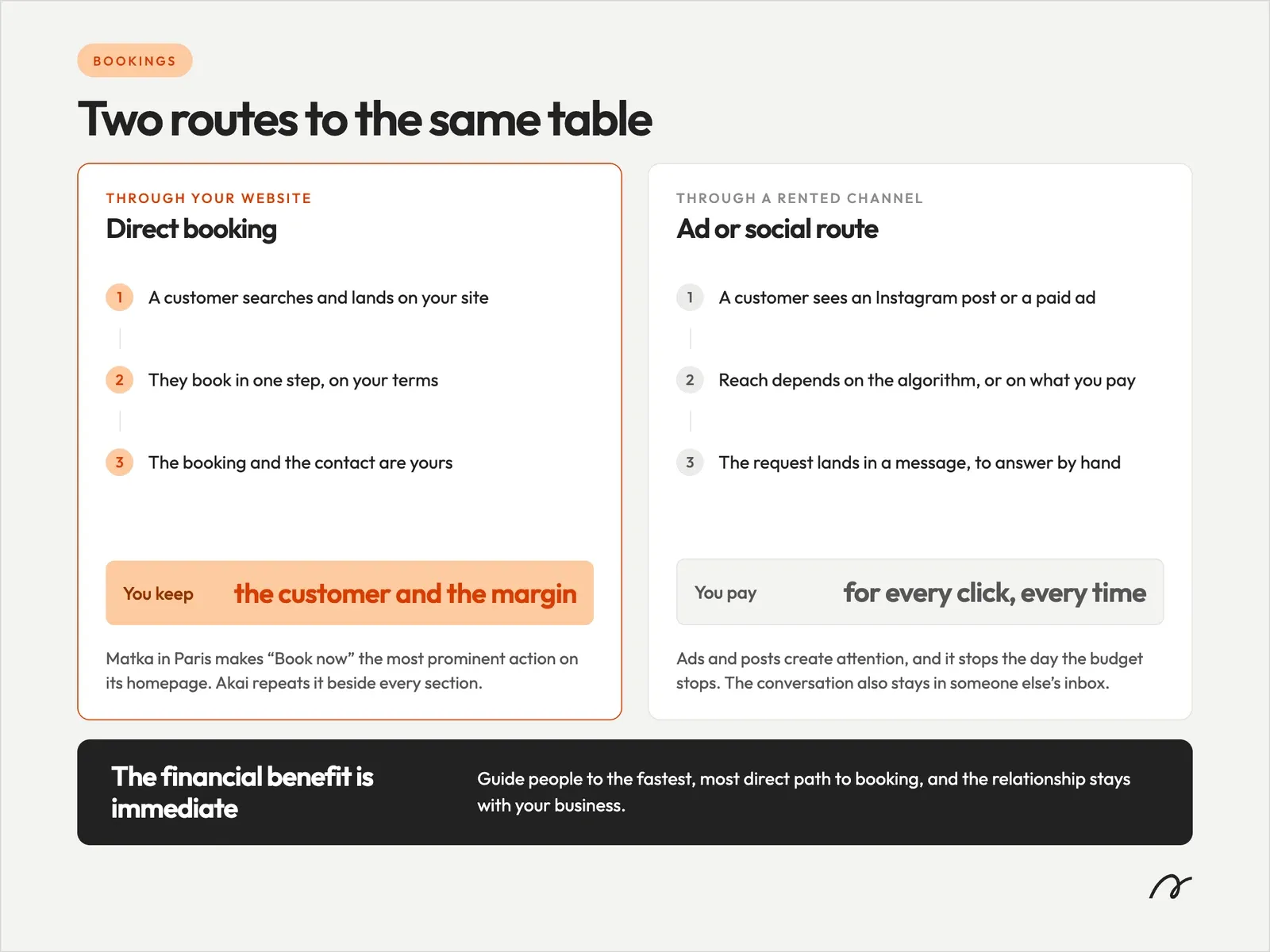
The financial benefit is immediate.
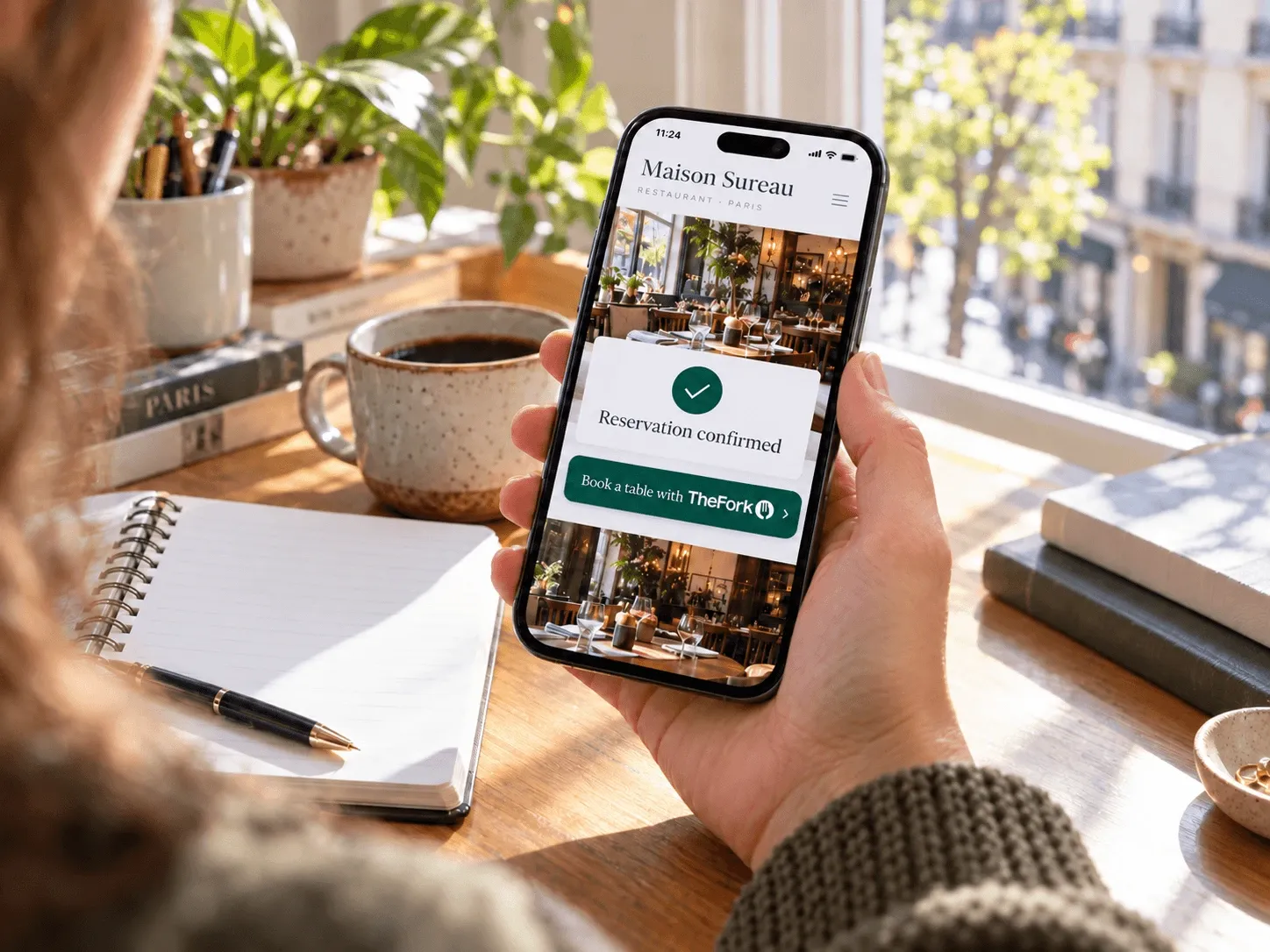
When someone books through your website, the booking happens on your terms.
Third-party platforms charge commissions and, more importantly, train customers to return to their platform instead of your business.
Look at the sites featured in the Project Showcase.
Matka, a Michelin-starred restaurant in Paris, makes “BOOK NOW” the most prominent action on its homepage.
Akai in Brussels also places “Book now” alongside each featured section.
These websites leave no room for confusion—they understand that the goal of a business website is to guide customers to the fastest, most direct path to booking.
Get Discovered by New Customers
Most social media posts are only seen by people who already follow you.
Search helps you reach people who have never heard of your business but are actively looking for the products or services you offer.
Your Google Business Profile plays a major role here, and it becomes much stronger when it points to a website that clearly explains who you are and what you offer.
Without a website, you’re relying almost entirely on a business listing, which is one of the biggest reasons local businesses miss opportunities to appear in Google search results.
Control the First Impression
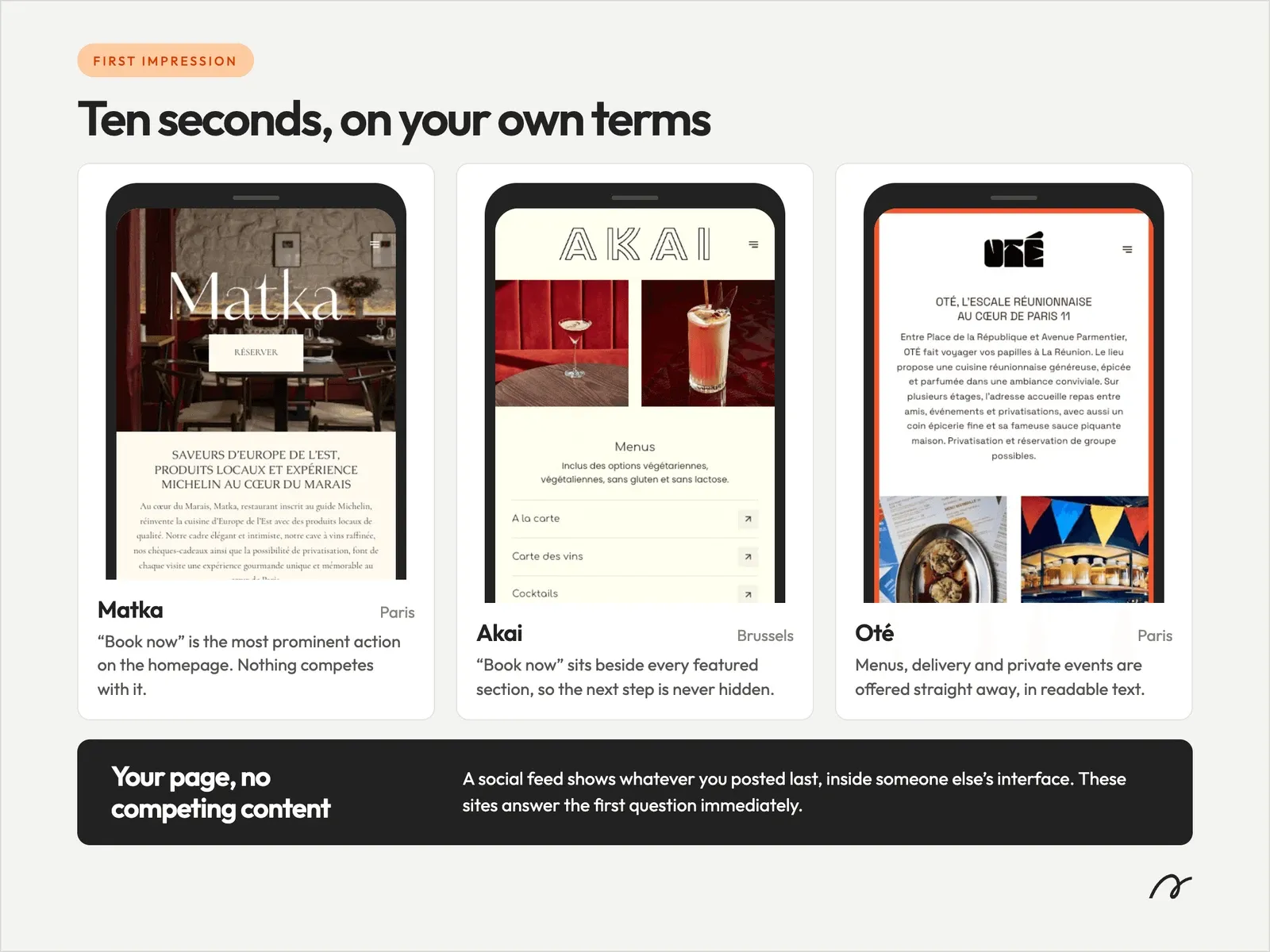
When someone searches for your business after hearing about it, the first ten seconds often determine whether they book.
On social media, that first impression depends entirely on whatever you happened to post most recently.
It’s presented inside another company’s interface and surrounded by competing content and advertisements.
Your website gives you complete control.
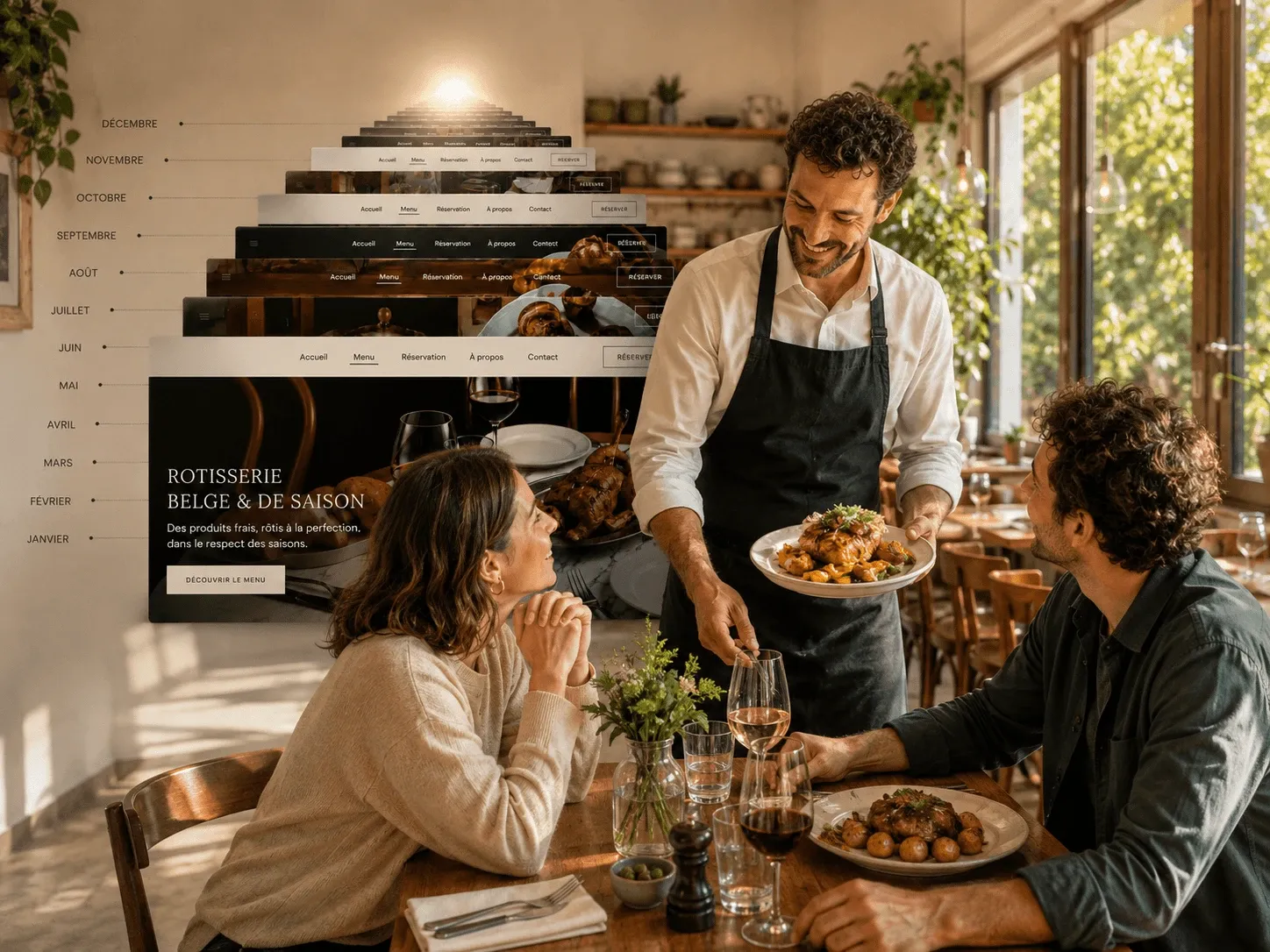
Bouillon in Brussels presents its menu in clear, readable text instead of images.
OT in Paris immediately offers visitors options to “See menus,” “Order delivery,” or “Book” private events.
By answering visitors’ most important questions immediately, these websites create a much stronger first impression than a standard social feed ever could.
All the Information Customers Need Is Easy to Find
Opening hours, location, services, prices, accepted payment methods, group bookings, and whether you’re dog-friendly are all details customers frequently look for before making a booking.
On social media, this information is often buried in bios or older posts.
Customers end up sending messages just to ask basic questions.
A website keeps this information permanently available, reducing repetitive enquiries while making it easier for customers to choose your business.
What a Website Will Not Do
A website won’t magically fill your restaurant or generate customers on its own.
Without visibility through search, social media, reviews, referrals, or other marketing channels, a website will simply exist without attracting visitors.
Be cautious of anyone promising that a website alone will transform your business.
A website has one primary job: converting the attention your business already receives into enquiries, bookings, or sales while giving customers a trusted place to learn about you.
People still need to discover your business first through search, social media, reviews, signage, or word-of-mouth.
How to Effectively Combine Social Media and Your Website
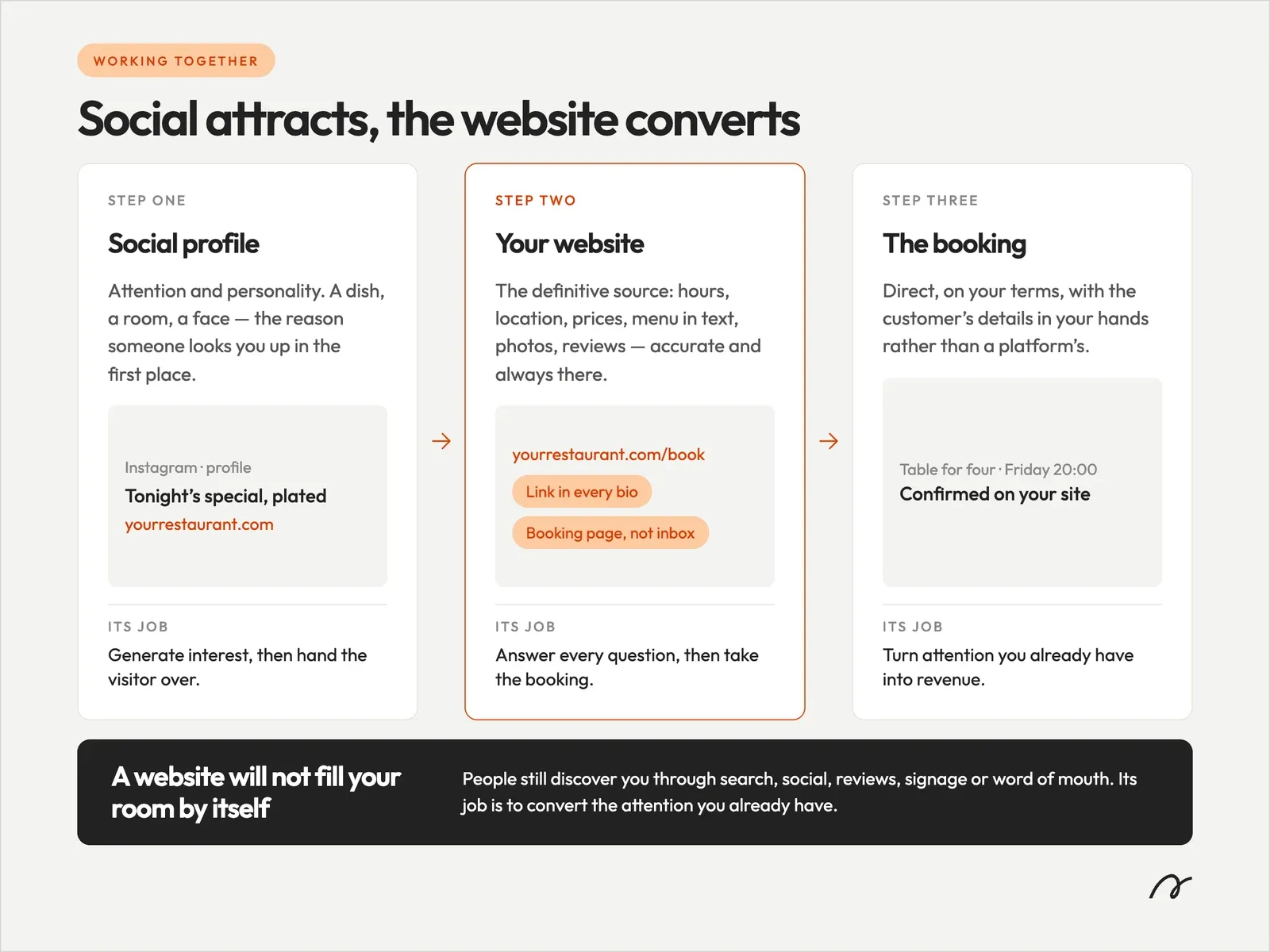
Social media and your website serve different purposes.
Social media attracts attention and builds your brand personality.
Your website converts that attention into bookings while keeping important business information accurate and up to date.
Include your website link on every social media profile and direct customers to your booking page instead of your inbox.
Your website should be the definitive source of information about your business, while your social channels should generate interest and encourage people to visit.
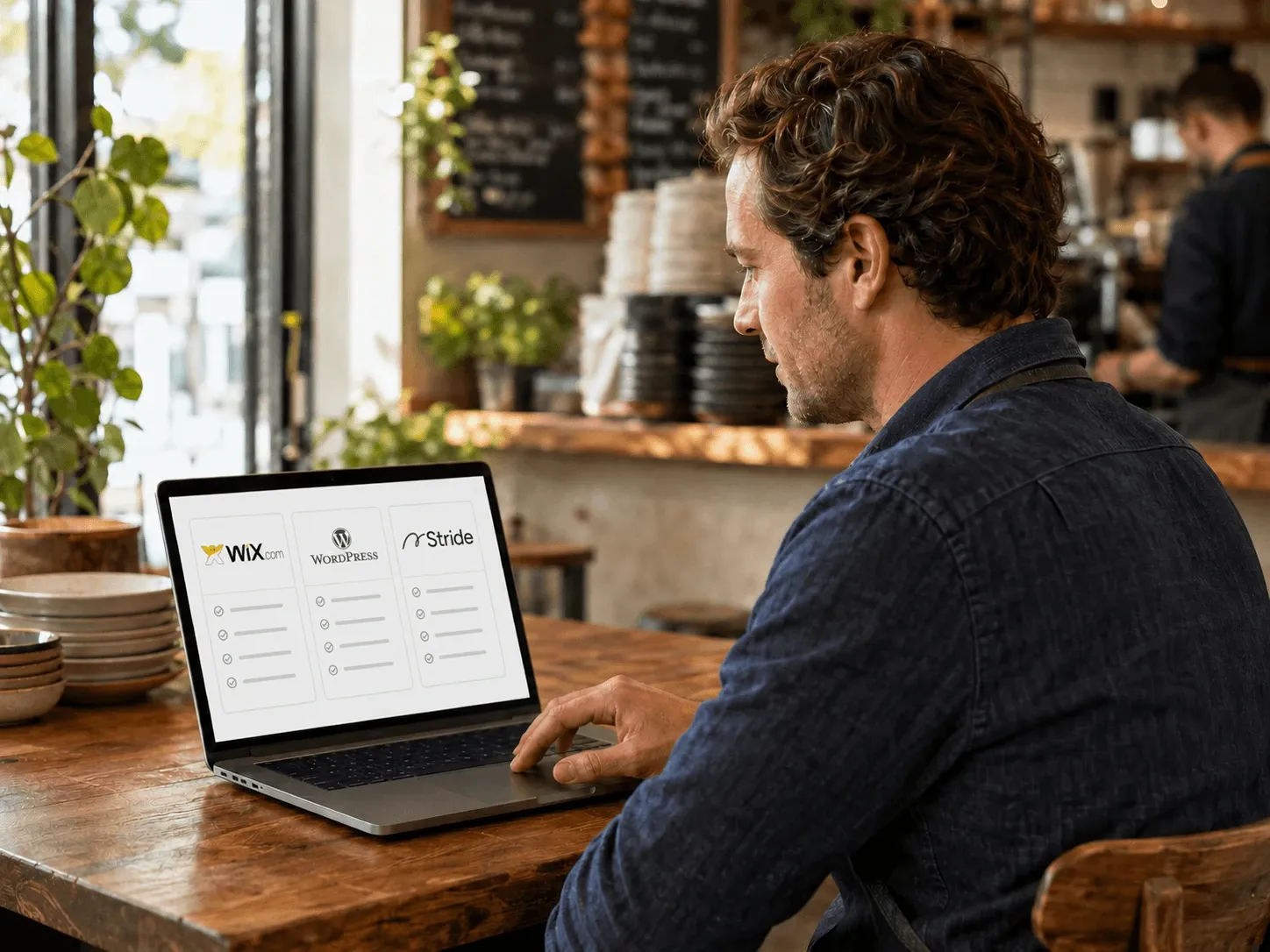
Whether you build your website using a small business website builder or choose a managed platform, the most important thing is keeping it updated without turning it into another task on your to-do list.
Frequently Asked Questions
Should My Business Have a Website Even if I Use Instagram or Facebook?
Yes. Using both is the best approach because social media belongs to someone else. Social platforms mainly reach existing followers, while a website allows anyone to discover your business, learn about your services, and book directly. The two work best together.
Is a Website Worth the Investment for a Very Small Business?
If customers need your opening hours, pricing, menu, or a way to book, then yes. Even a single, well-designed page can be enough. A website becomes worthwhile when it removes barriers between your business and your customers.
Do I Need a Website if I Already Have a Google Business Profile?
A Google Business Profile is essential and free, but it isn't a replacement for a website. Google has more confidence in businesses it can verify through an official website, while your Business Profile mainly supports people already searching for your business or services nearby.
What Should a Local Business Website Include?
At a minimum, your website should include what your business does, where you're located, opening hours, prices or your menu in text format, high-quality photos, a booking or ordering system, and customer reviews or testimonials. Which extras matter beyond those depends on the business. A restaurant that does private dining needs an enquiry form and a section describing the space at the bare minimum; a clinic needs a way to request an appointment. Work out the one or two things your own customers must be able to do, and treat those as part of the minimum. From there the rest are add-ons that earn their place only when they match your trade: a menu, table booking, or food ordering, a FAQ, a blog, a newsletter, events, gift cards, a team page, or reviews shown on the page. On a managed platform, the basics come set up for you, and these modules switch on as you need them, so you start with the essentials and add the rest when it fits. See how it works on the platform page.