Why Most Restaurants Are Invisible to ChatGPT
AI tools like ChatGPT can't find most restaurants online. Here's why it happens and how to make your restaurant show up in AI answers.
 Pablo
Why Are Most Restaurants Invisible to ChatGPT?
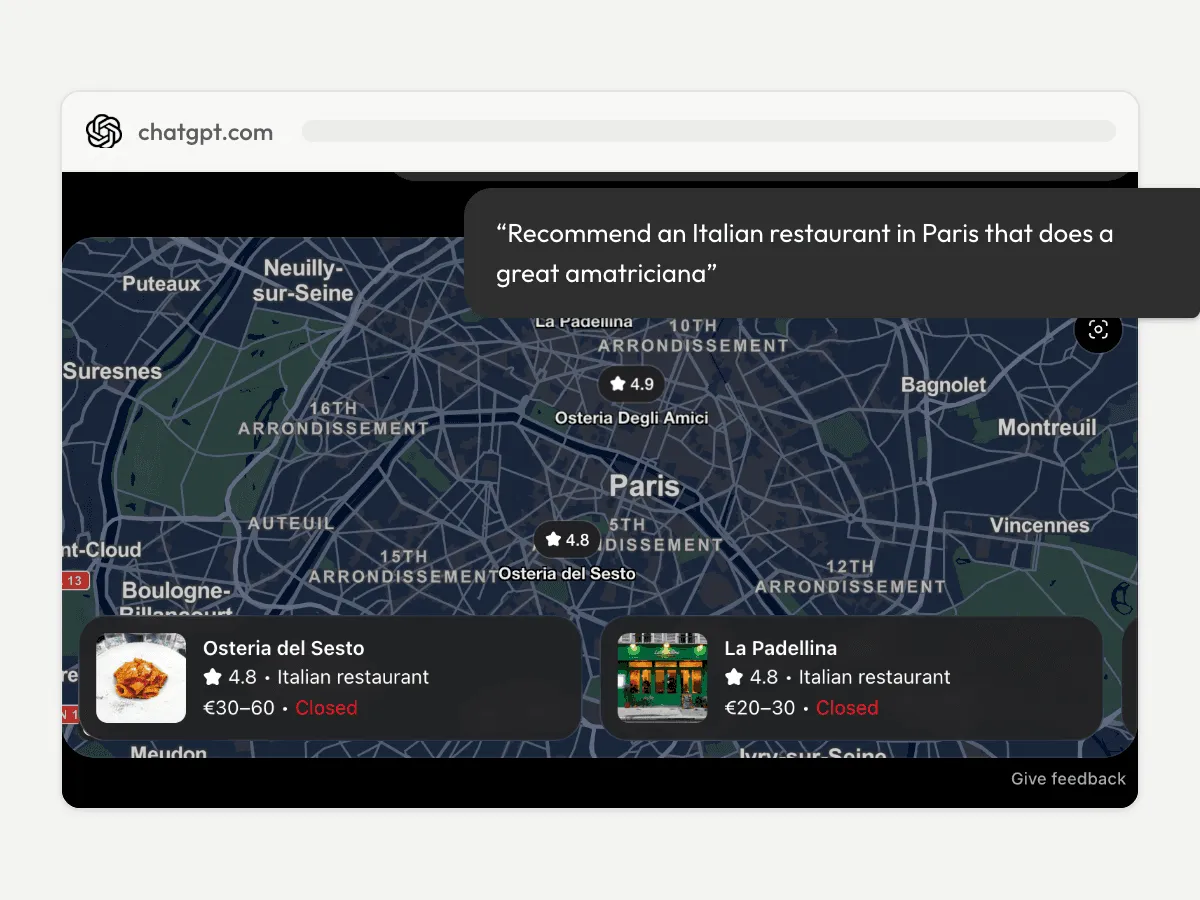
Most restaurants are invisible to ChatGPT because the assistant cannot read enough about them. Their menu sits in a PDF or a photo, their details differ from one site to the next, and their website says very little in plain text. With nothing clear to rely on, the assistant recommends a restaurant it understands better.
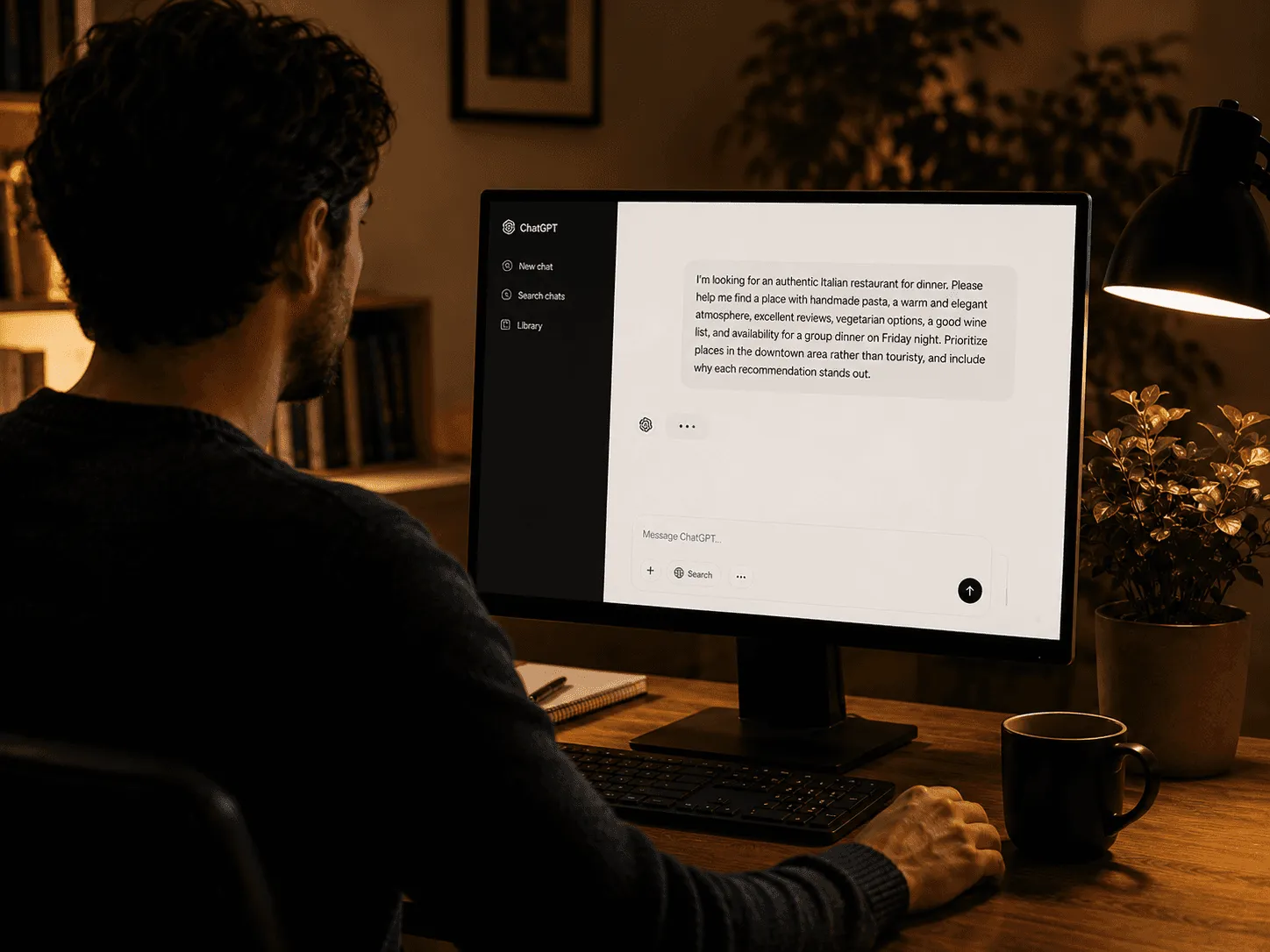
More diners now ask ChatGPT, Google’s AI answers and voice assistants a simple question: where should we eat tonight? If your restaurant is not in the answer, you lose tables you never knew existed. The good news is that getting found by AI is mostly the same work that gets you found by people.
How Does ChatGPT Decide Which Restaurants to Recommend?
ChatGPT builds its answer from public information it can read as text: your website, your business listings, your reviews and the directories that mention you. It favours restaurants whose details are clear, recent and the same everywhere. It does not read your menu PDF or the text inside your photos.
| Source | What the assistant learns from it | What to check |
|---|---|---|
| Your website | Cuisine, dishes, prices, area, practical details | Is it written as text on the page, not only shown in images? |
| Business listings | Name, address, hours, category | Are they complete and identical on every listing? |
| Reviews | Whether guests recommend you, and for what | Are there recent reviews that name dishes and occasions? |
| Directories and booking platforms | Confirmation that the other sources are right | Do they show the same name, address and phone number? |
When those sources are thin, outdated, or contradict each other, the assistant quietly skips you.
Do All AI Assistants Use the Same Sources?
No. Each assistant leans on a different search index. Google’s AI answers and Gemini draw on Google’s index and Google Business Profiles. ChatGPT’s search works with outside search providers, Bing among them, and Microsoft Copilot relies on Bing’s index. A restaurant that only looks after its Google listing can be visible in one assistant and missing in another.
In practice, that means two things. Your Google Business Profile still matters most, starting with the right main category and attributes. And it is worth claiming your listing on Bing Places and checking the main directories in your country, so the same facts appear wherever an assistant looks.
Why Does My Restaurant Get Skipped?
A restaurant gets skipped for three reasons, alone or together:
-
Your key facts live only inside images. Cuisine, area, hours and signature dishes shown on a photo or in a PDF menu cannot be read by a machine.
-
Your information is inconsistent. Google says you close at 10 pm, your site says 11 pm, a booking platform has an old phone number. The assistant cannot tell which one is right.
-
Your site has very little text that answers real questions. Diners ask for “a vegan-friendly Italian with a terrace near the station”. If none of those words appear on your site, you are not a match.
How Do I Get My Restaurant Recommended by ChatGPT?
You get recommended by making your restaurant easy to read and easy to confirm. Five fixes cover most of it:
-
Put your facts in real text. Cuisine, neighbourhood, signature dishes, price range and hours belong on the page as text, not only inside a photo. The same goes for the menu.
-
Make your name, address and phone number identical everywhere. Website, Google, Bing, booking platforms, social profiles: one spelling, one number.
-
Answer real questions on your site. Vegan options, large groups, terrace, parking, children, dogs. A short FAQ does the job.
-
Keep your reviews and your listing alive. Recent reviews that mention dishes give an assistant something to say about you. Our guide on using customer reviews to get recommended by AI covers the rating bar and the pace to aim for.
-
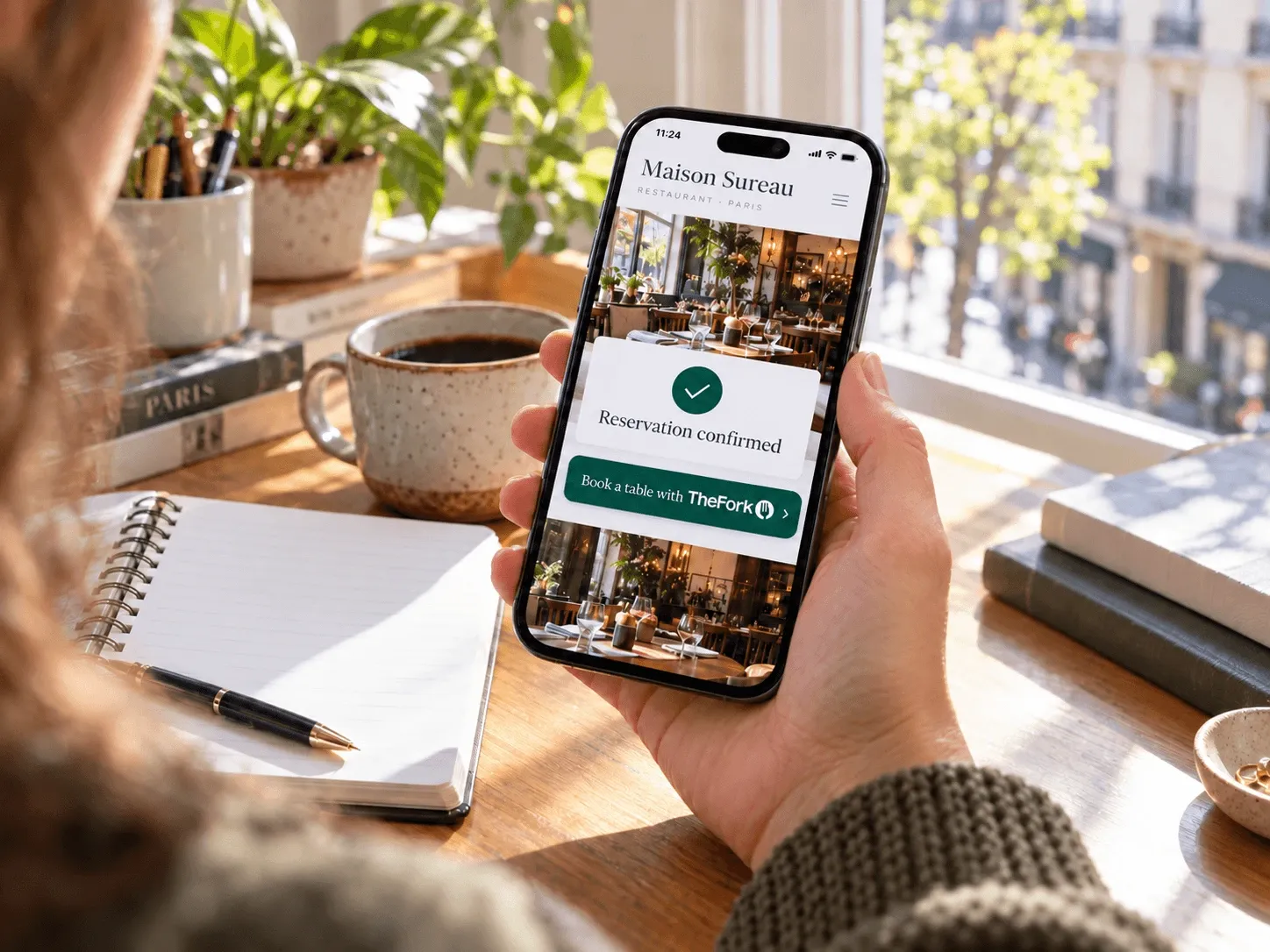
Be listed beyond Google. Claim Bing Places and keep the directories and booking platforms you appear on up to date.
How Can I Check Whether ChatGPT Recommends My Restaurant?
Ask it the way a diner would. Open a new chat, name your town or neighbourhood, and ask for what you serve: “Where can I eat good ramen in Ixelles tonight?” or “A restaurant with a terrace for ten people near the Duomo”. Then note three things: whether you appear, who appears instead, and which sources the answer cites.
Try a handful of questions, and repeat them in another assistant. Answers change from one run to the next, so one test proves little: look for the pattern. If the same competitors keep coming up, open their website and listings and see what they state in text that you do not.
Does This Also Help on Google?
Yes. Every one of these fixes also helps human visitors and classic Google search, because Google reads the same text, the same listing and the same reviews. You are not chasing one assistant: you are making your restaurant legible to every system that sends you guests. The steps overlap with getting your restaurant found on Google.
Do it once, properly, and the same clear information works everywhere at the same time.
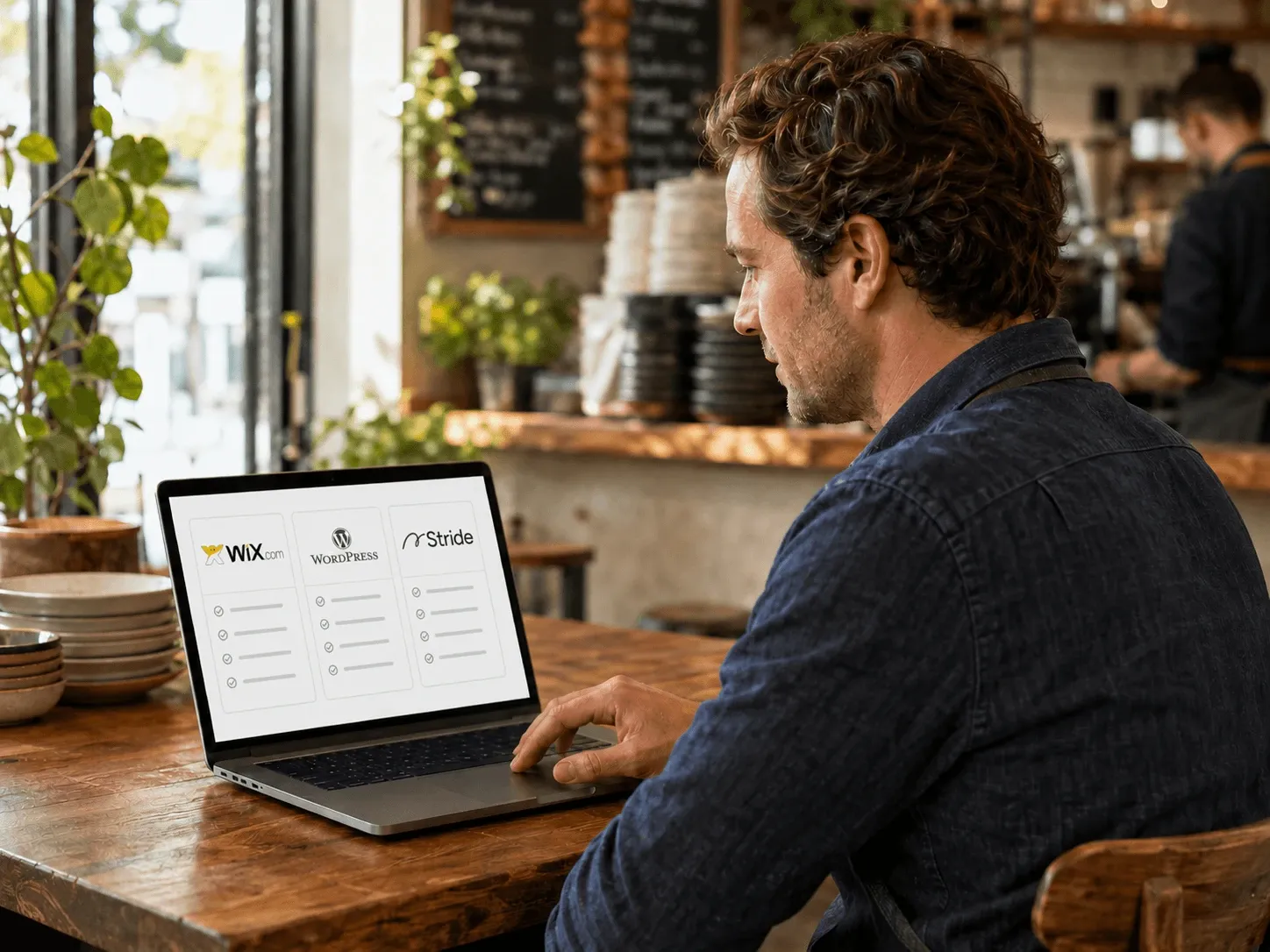
Stride builds your restaurant website as clean, structured text and keeps it up to date for you, so people and AI assistants can both read it.
Want to know where you stand? Book a free online presence analysis.
Frequently Asked Questions
Do I need to do anything special for ChatGPT?
No special trick. Clear, consistent, text based information about your restaurant is what every AI assistant relies on.
Is a PDF menu enough?
No. Machines struggle to read menus locked inside images or PDFs. Your dishes and details should exist as real text on a web page.
How fast will I see results?
AI sources refresh over weeks, not minutes. Fix the basics now and your visibility compounds over time.
Can I pay to be recommended by ChatGPT?
Not in the answer itself. ChatGPT shows ads on some plans, but OpenAI labels them as sponsored, keeps them separate from the answer and says advertisers cannot influence what the assistant recommends. To be in the answer, work on your own information. An assistant recommends the restaurants it can read about and finds confirmed across several sources.
Do I need a website if I already have a Google listing?
Yes. The listing gives the basics, but your website is the only place where you decide what is said about your cuisine, dishes and practical details, in text an assistant can read. The two should say the same thing.