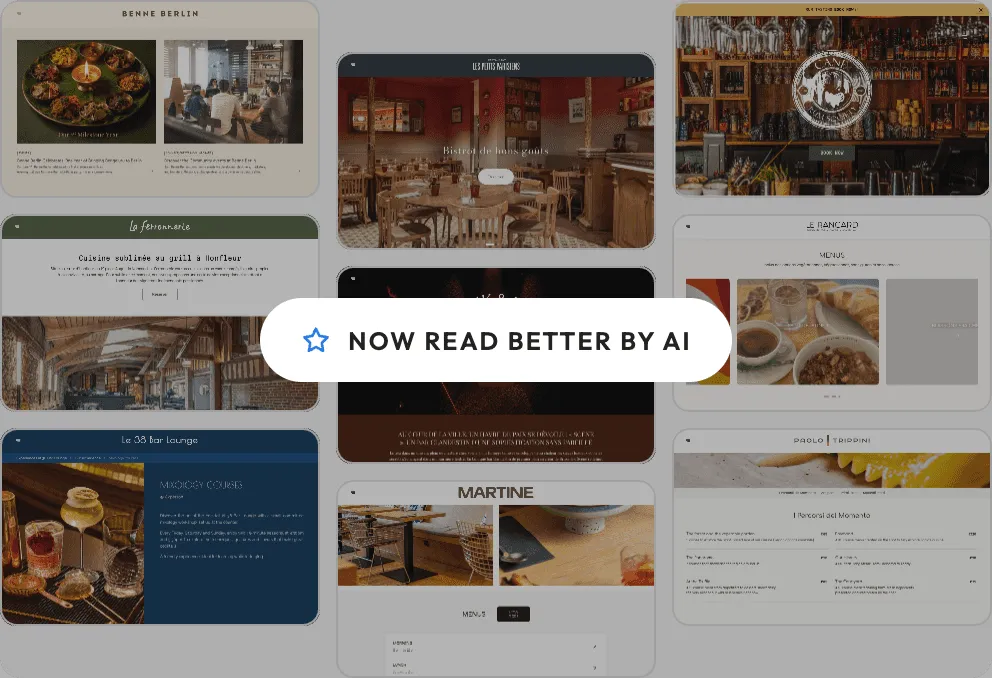
A Restaurant Website With TheFork Bookings Built In
Stride and TheFork have partnered so a restaurant can have a managed, professional website with the TheFork booking module built in. Reservations come directly and carry no commission; we keep the site updated for you, and TheFork partners get preferential terms with no long-term commitment.
Why a Website You Own Still Matters
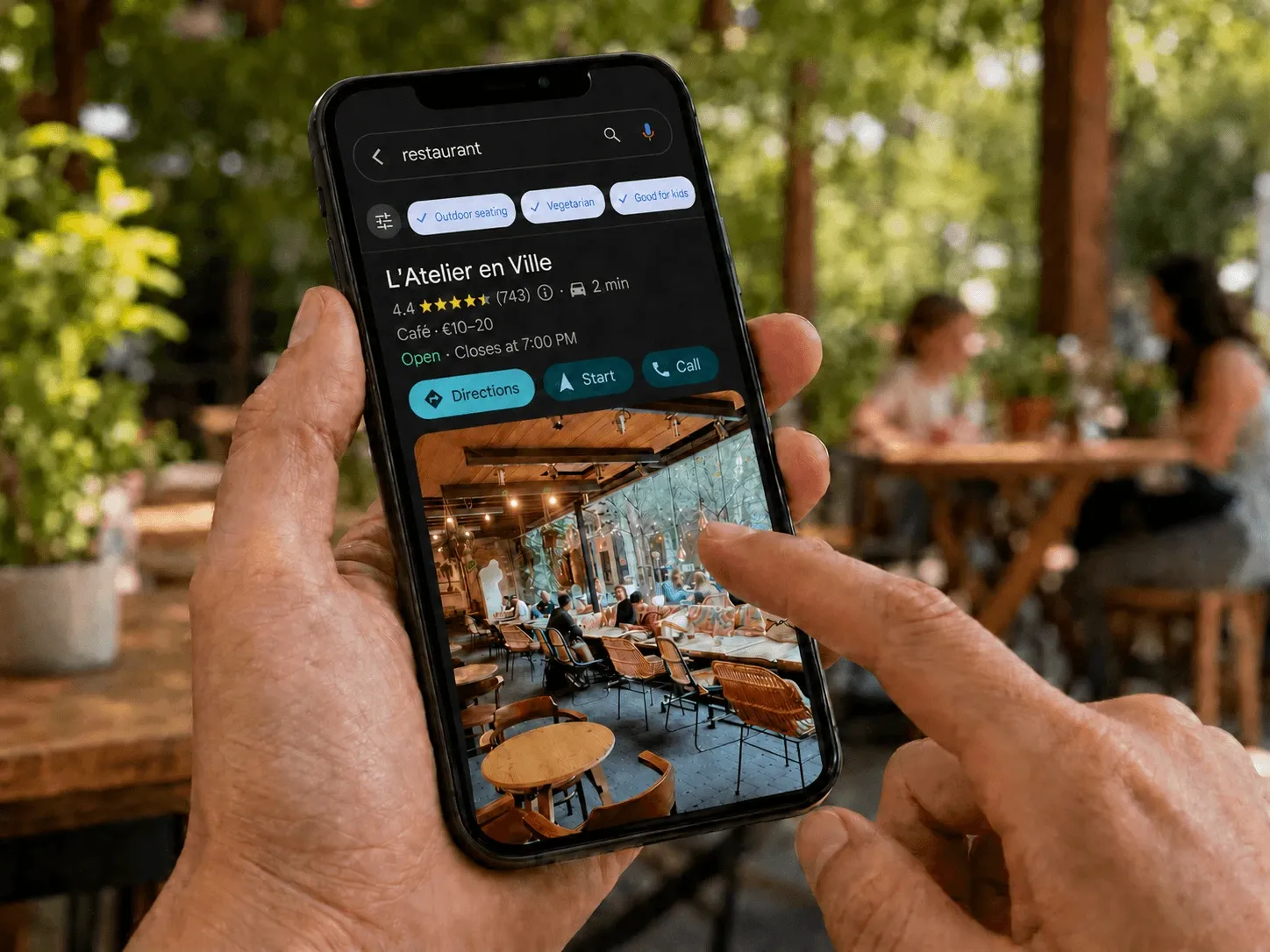
Most diners look you up online before they book. They search your name, they check the photos, they want the menu and a way to reserve in the same minute. A TheFork listing puts you in front of those diners, which is exactly what it does best. What it does not do is give you a place that is yours: your look, your story, your terms.
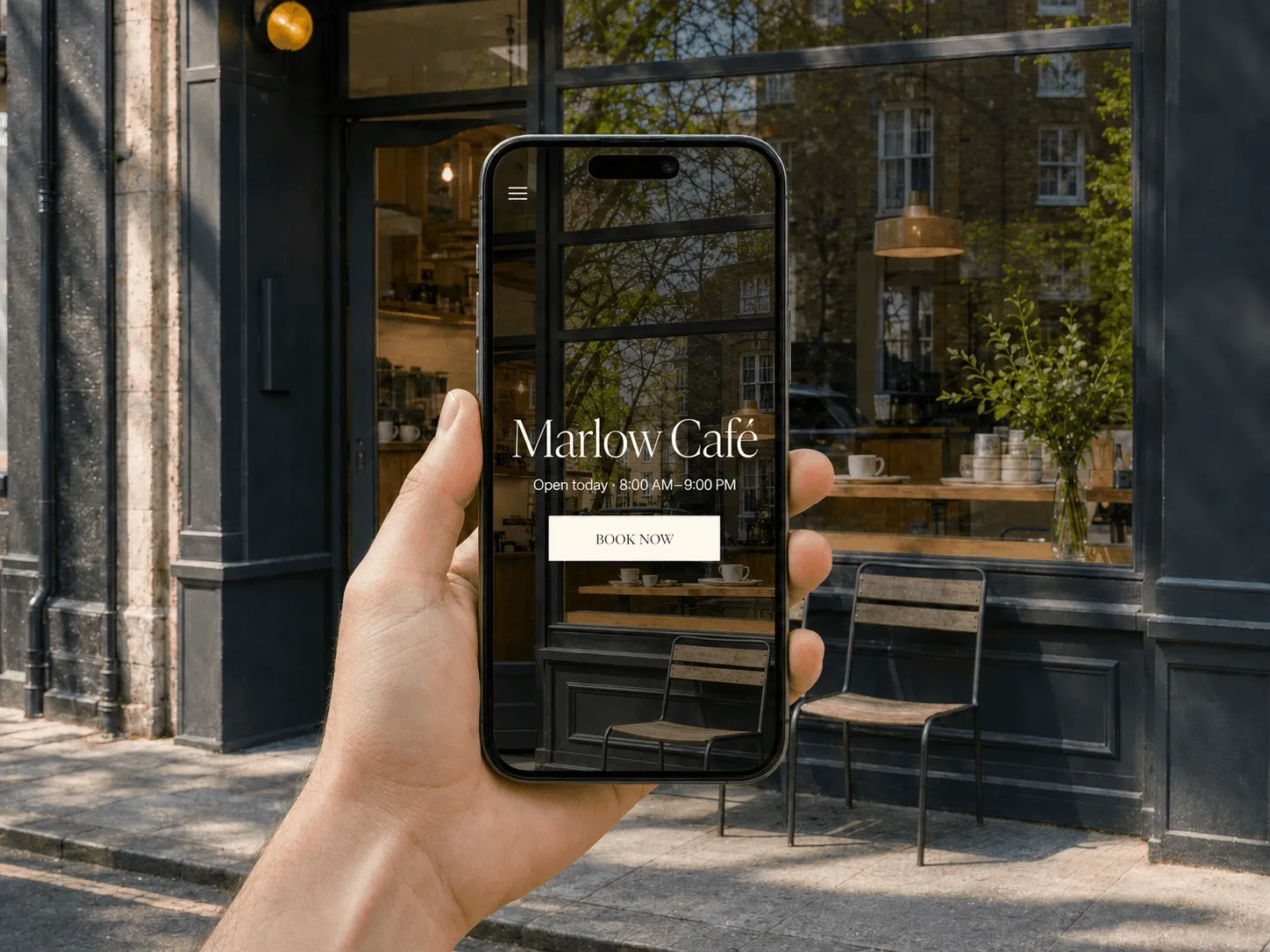
A website is the one part of the online presence you own. It is where you set the first impression, publish the details customers need, and take bookings on your own terms rather than a platform’s. The listing brings people in. The site is where they decide, and where they come back.
How Stride and TheFork Work Together
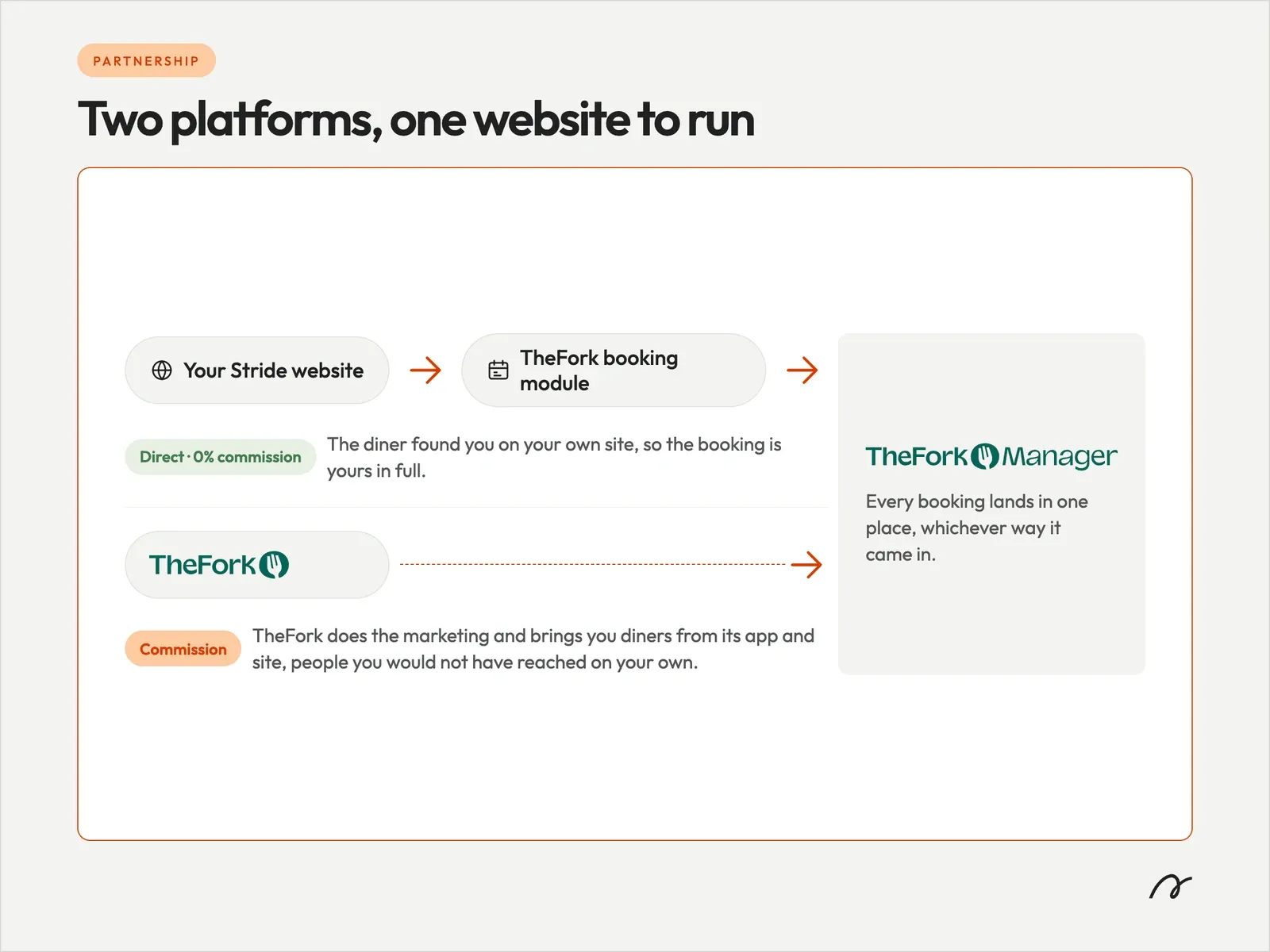
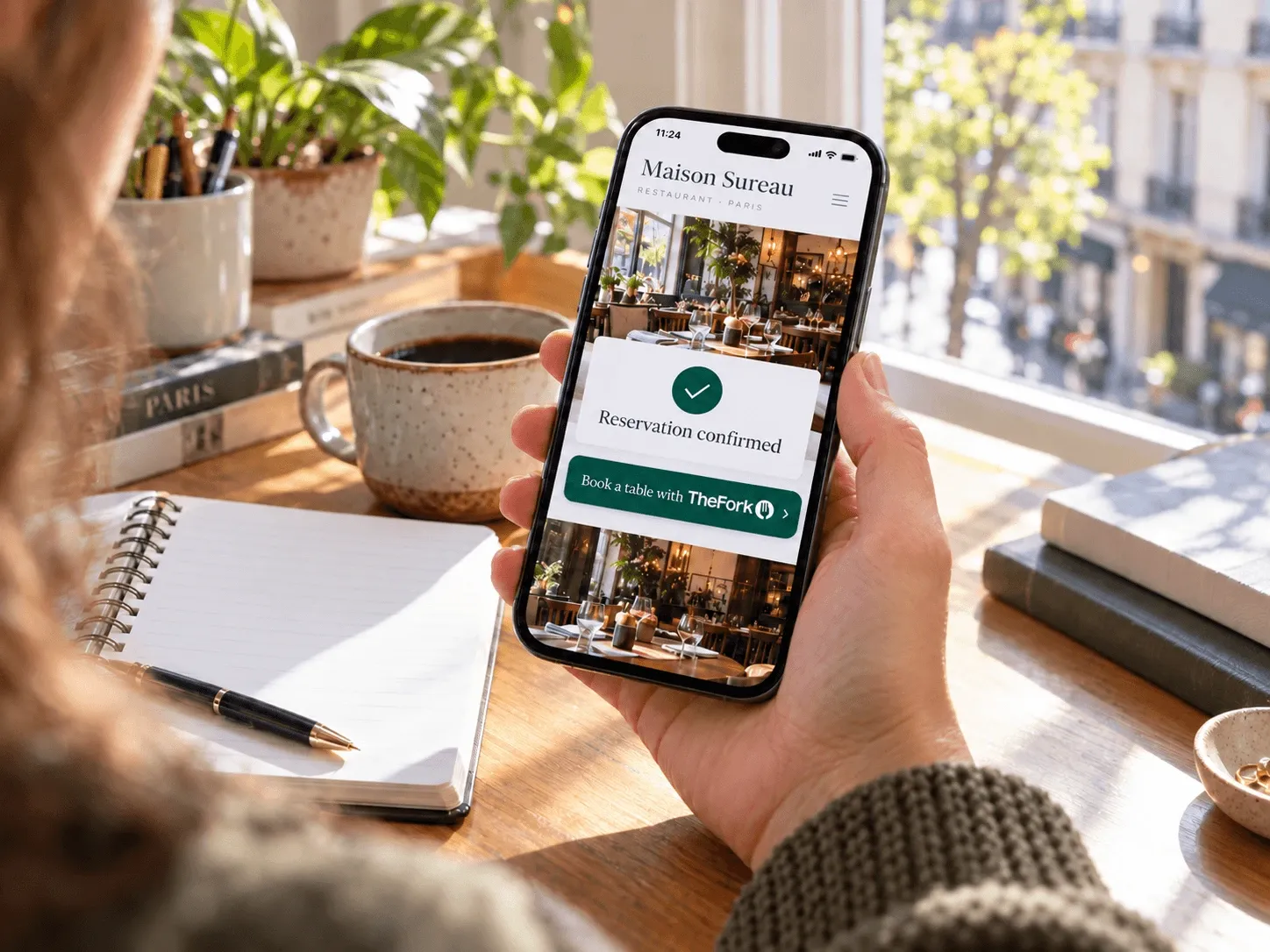
Until now, a good website and good bookings were two separate jobs, often two separate tools. The partnership joins them. Stride builds and runs the restaurant website; TheFork powers the reservations inside it. You get one managed site, with the booking engine you may already use built straight into the page.
The point is that nothing is bolted on afterwards. The TheFork booking module sits in your site from day one, so a diner books a table without leaving your page or passing through a third party first.
What You Get
TheFork bookings built in, no commission on direct covers
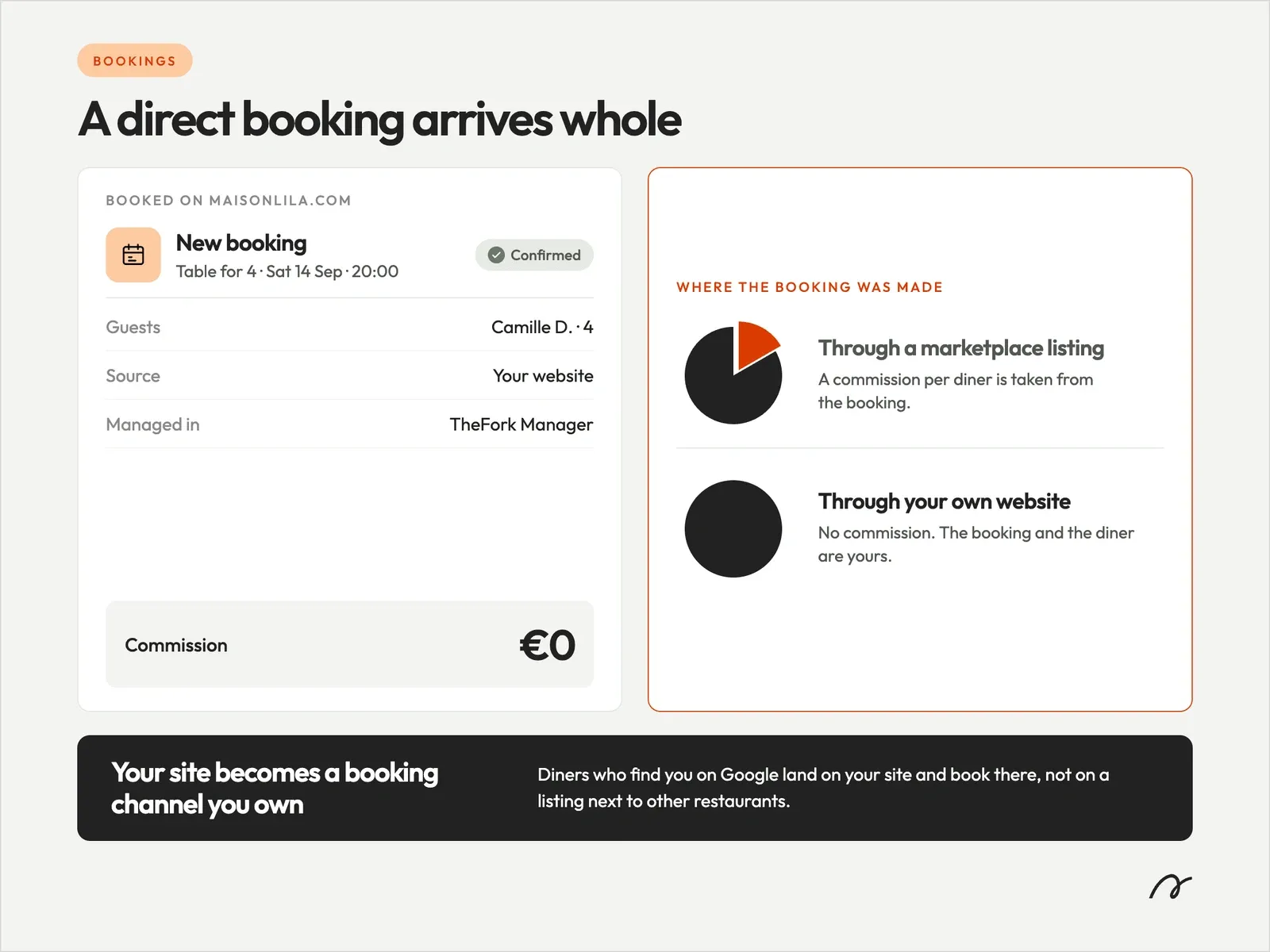
A diner reserves directly on your own site, and that direct booking carries no commission. You keep the cover and the customer. TheFork still brings you new diners through its marketplace, which is what it is for, and your own site keeps the regulars booking direct, where it costs you nothing.
A managed site that keeps up
You do not build it or maintain it. Stride sets it up and looks after it, and it keeps improving on its own: faster loading, cleaner structure, and the tools you already use connected. It is managed for you, so the website is not another job on your plate.
Found on Google, and by AI
The site is built as clean, readable text, which is what search engines and AI assistants both rely on to find and describe you. That is how you get your restaurant found on Google, and how you show up when an AI assistant recommends somewhere to eat. Your cuisine, your area, your hours, and your signature dishes live in real text, not trapped in an image, so the diner searching nearby, or the assistant answering them, can actually read them.
Your menu, your socials, and the tools you already use
Your menu sits on the site as readable text with a QR code for the table. Your Instagram feed can display on the page. Your point of sale, your ordering, and your other tools connect rather than compete. One site, one place, everything pointing the same way.
A Website That Follows Your Goal
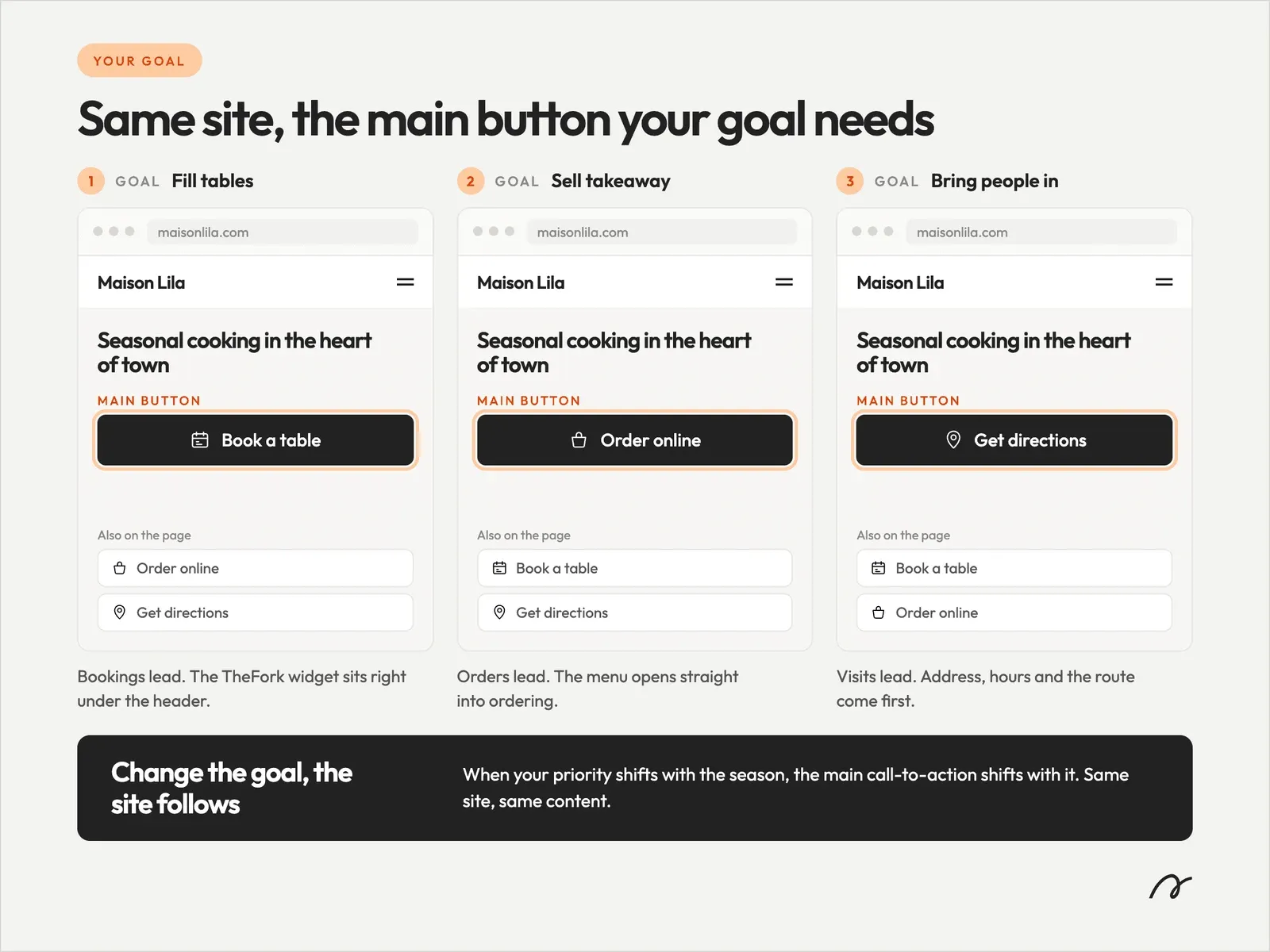
Not every restaurant wants the same thing from its site. Some need reservations above all. Some push online orders. Some just need more people through the door. The site adapts to that: the structure and the main call-to-action shift to match your primary goal, so the first thing a visitor is nudged to do is the thing that matters most to you. Change the goal, and the site follows.
Preferential Terms for TheFork Partners
If you are already a TheFork partner, the partnership is built for you. There are preferential rates, clear and simple formulas, and no long-term commitment. It is a managed website, with your bookings built in, on terms negotiated for TheFork restaurants specifically.
What This Will Not Do
Be clear about the limits. A website does not fill your room on its own; it converts the attention your listing, your search presence, and your reputation earn, and it holds the ground where diners check you out. It will not replace TheFork’s marketplace for reaching brand-new diners; the two do different jobs. And it is not a magic switch: a site works when the details are right, and the bookings are easy, which is exactly what the managed setup takes care of.
What it will do is give you a professional site you own, with direct commission-free bookings inside it, without you having to run two systems.
How to Start
If you are a TheFork partner, ask your TheFork advisor or check your TheFork Manager account for the partner terms. If you want to see where your restaurant stands online first, run a free online presence analysis: it shows how your website, your search visibility, and your reviews look to a diner discovering you today.
Frequently Asked Questions
I already have a TheFork listing. Do I need a website too?
They do different jobs. The listing reaches new diners in the TheFork marketplace. The website is the place you own, where diners who search your name decide to book and where regulars return directly. The partnership connects the two, so your bookings run through both.
Are the bookings really commission-free?
Direct bookings made on your own site carry no commission. That is the point of taking reservations on a site you own. TheFork's marketplace, which brings you new diners, works the way it always has.
Do I have to build or maintain it myself?
No. Stride builds and manages the site for you, and it keeps improving on its own. There is no code to write and no separate system to run.
How do I get the partner pricing?
Speak to your TheFork advisor or open your TheFork Manager account. The preferential rates and formulas are set up for TheFork restaurant partners.