How to Respond to Negative Reviews
A simple playbook for responding to negative restaurant reviews, protecting your reputation, and winning back future diners.

How Do You Respond to a Negative Review?
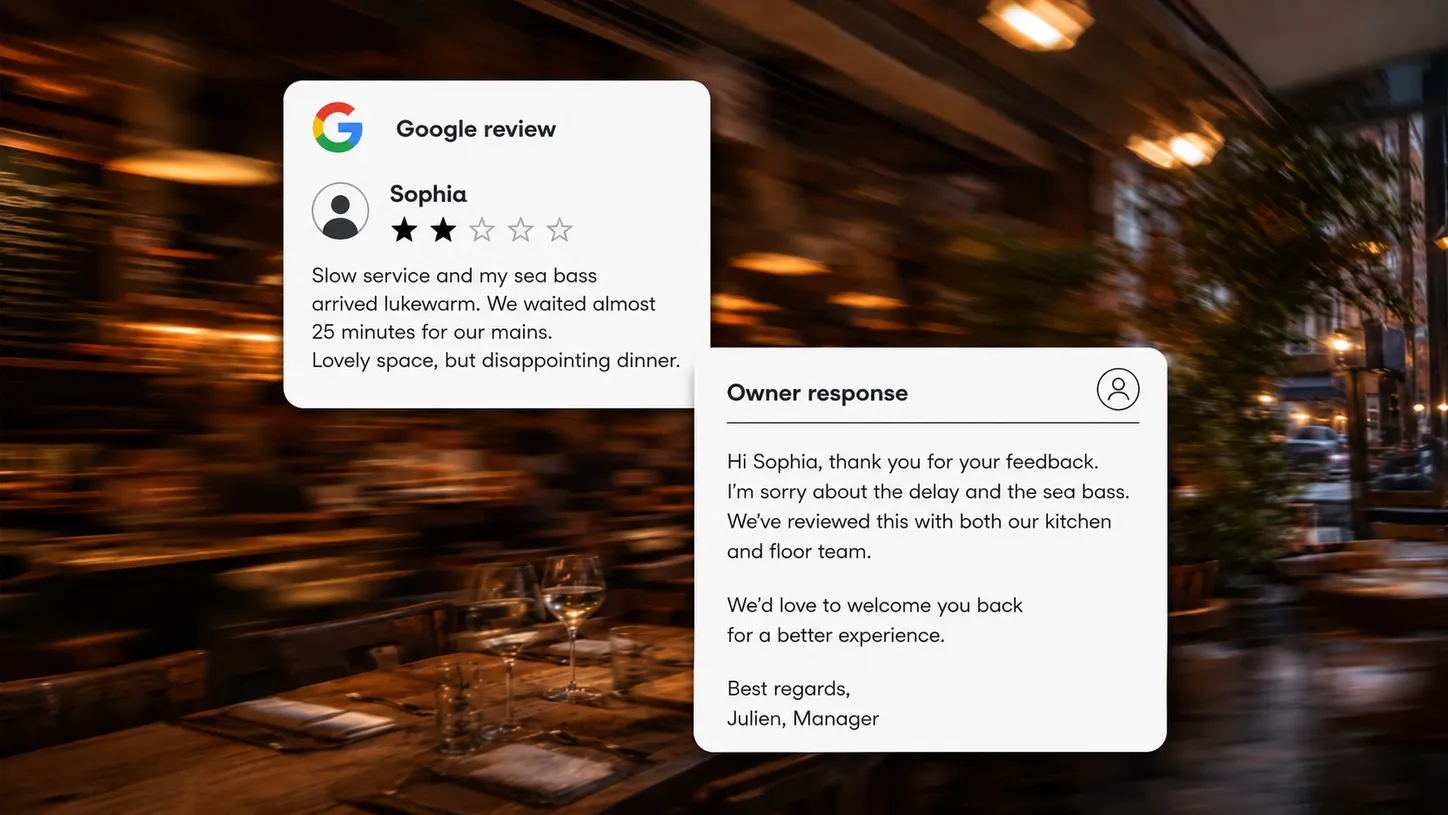
Reply within 24 to 48 hours, in a calm tone: thank the guest, name the specific problem, apologise once, say what you changed, and invite them to contact you directly. Keep it short. You are writing for the guest, and even more for everyone who reads the review after them.
One harsh review can undo a hundred good nights. But the diners reading it are not really judging the complaint. They are judging how you answer it. Here is the approach we see work for restaurants every week.
Why Does Your Reply Matter More Than the Review?
Your reply matters more because future diners read it as proof of how you treat guests. Most people expect a busy restaurant to pick up the occasional bad review. What they want to know is whether you care when something goes wrong.
Most diners read reviews before choosing where to eat, and they read the owner’s replies too. A thoughtful reply tells every future reader that you are present, you listen, and you fix things. That reassurance converts far better than a spotless score with total silence underneath it.
What Are the Six Steps of a Good Reply?
-
Respond within 24 to 48 hours, while it still matters to the guest and to readers. Take the time to ask your team what happened first.
-
Thank the person for taking the time, even when it stings.
-
Acknowledge the specific problem in their words, not with a generic template. “The 40-minute wait for your main course” shows you read the review.
-
Apologise once, briefly, with no excuses and no blame.
-
Say what you changed or will check, so it reads as action, not public relations.
-
Invite them back privately, with a name and a direct way to reach you.
What Should You Avoid When Replying?
Avoid anything that turns a complaint into a public argument. Four mistakes come up again and again:
-
Arguing the facts in public.
-
Copy paste replies that read like a robot.
-
Going silent and letting the review sit unanswered.
-
Offering a refund before you understand what actually happened.
One more: never offer something in exchange for changing or removing a review. Google’s review policy forbids it, and readers notice. Invite the guest back because you want to put it right, whatever happens to the review.
What Does a Good Reply Look Like?
A good reply is four or five sentences long, uses the guest’s name, mentions what went wrong, and ends with a direct contact. Here is one you can adapt tonight.
Hi [name],
Thank you for taking the time to tell us. We are sorry the [dish or service] fell short on [day]. We have spoken with the team about [specific fix], and that is on us.
We would love a second chance: email me directly at [owner email] and I will personally look after your next visit.
[Owner name], [restaurant].
How Do You Handle an Unfair or Fake Review?
Stay polite, give your side once, and report the review to the platform. On Google, you report it from your Business Profile, and Google removes reviews that break its rules, such as spam or a review left for the wrong business. It does not remove a review because you disagree with it.
If you cannot find the visit in your bookings, say so without accusing anyone:
Hi [name],
Thank you for your message. We could not find a booking or a table under your name on [day], and what you describe is not the experience we want anyone to have. Please write to me at [owner email] so I can look into it properly.
[Owner name], [restaurant].
Future readers see a calm owner and draw their own conclusion.
Do Negative Reviews Hurt Your Visibility on Google and in AI Answers?
One negative review among many good ones changes little. Google says the number of reviews and the rating are factors in local ranking, so the overall picture counts for more than any single review. AI assistants read reviews too when they decide which restaurants to suggest.
That makes the best answer to a bad review a steady flow of new ones. Ask happy guests regularly, at the table or after a booking, rather than in one big campaign. Our guide on using customer reviews to get recommended by AI covers the rating to clear and the pace to aim for, and restaurant SEO shows where reviews fit in local search.
On Stride, your Google and TheFork reviews arrive in one inbox, the bad ones first, so a hard review gets its reply before the next guest reads it: see how review management works.
See how your reviews work for you today with a free online presence analysis.
Frequently Asked Questions
Should I respond to every negative review?
Yes, especially recent ones. A pattern of calm, specific replies reassures future diners far more than a perfect score with no responses.
What if the review is unfair or fake?
Stay polite, state your side once and briefly, then report it to the platform. Never argue in the thread, future readers remember the tone, not the dispute.
Does responding to reviews help my Google ranking?
Fresh activity on your Google listing supports local visibility, and a steady stream of owner replies signals an active, trusted business.
How quickly should I reply to a negative review?
Within 24 to 48 hours. Soon enough that the guest and other readers see you care, and late enough that you have checked with your team what happened.
Can I delete a negative review?
Not yourself. The guest can edit or delete it, and the platform removes it only when it breaks its rules, for example spam or a review of the wrong business. An honest bad review stays, which is why your reply matters.